
Riboflavin - B2 Group
General Overview
Riboflavin, also known as vitamin B2, naturally appears in diverse foods. It participates in energy production and supports various metabolic processes as part of everyday body function. It is simply one element contributing to balanced nutrition through varied eating patterns.
Natural Sources
Riboflavin naturally occurs in:
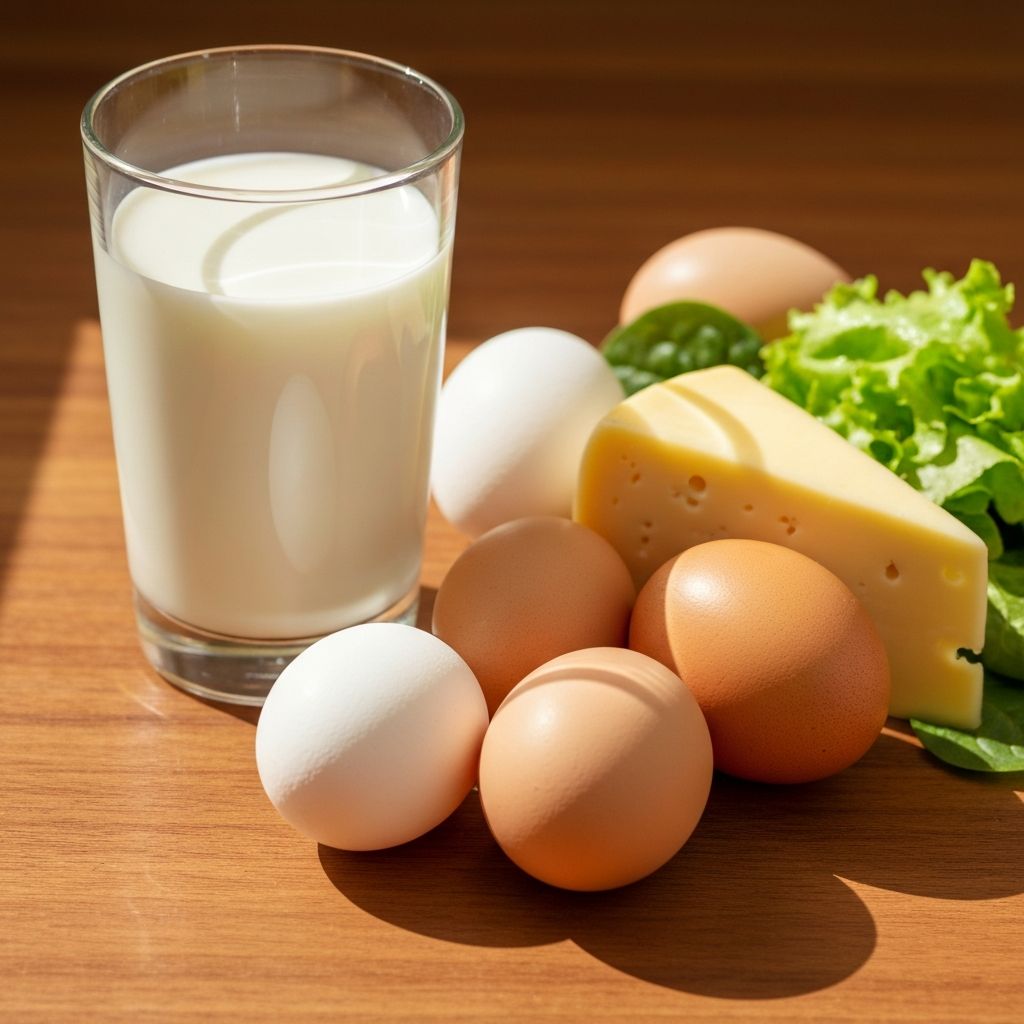
- Dairy — milk, yogurt, cheese
- Eggs — particularly in the yolk
- Leafy greens — spinach, kale, collard greens
- Legumes — almonds, mushrooms
- Whole grains — whole wheat, brown rice, fortified cereals
- Meat and fish — chicken, beef, salmon
General Role in Body Physiology
Riboflavin serves as a coenzyme in many metabolic reactions throughout the body. It participates in energy production from carbohydrates, fats, and proteins. It also supports cellular growth and contributes to maintenance of tissues and skin health as part of everyday physiological processes.
These are general roles in normal body function. The body naturally regulates riboflavin from food sources as part of balanced eating.
Absorption and Dietary Context
Riboflavin from whole foods is naturally absorbed during digestion. It is water-soluble, meaning the body does not store large amounts and regular dietary sources support ongoing needs. Including diverse dairy, eggs, greens, and whole foods naturally provides riboflavin through everyday eating.
Supplemental riboflavin forms offer isolated or combined B vitamins as concentrated preparations for specific needs. Both food sources and supplements represent normal parts of modern eating routines.
Important Context
This page provides purely educational information. It is not medical advice, nutritional guidance, or health direction. Individual riboflavin needs and dietary preferences vary. Consult professional resources for personal dietary decisions and supplementation.